
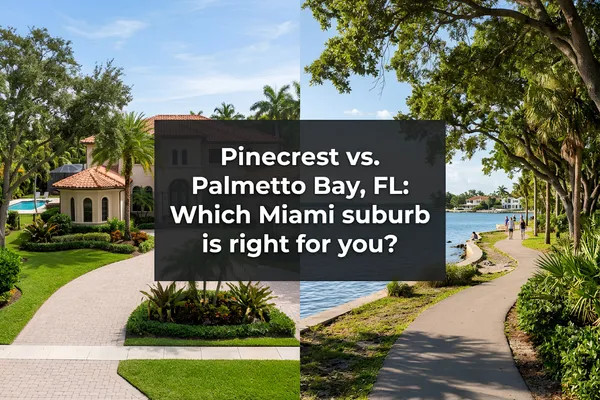
Pinecrest vs. Palmetto Bay: Miami Suburb Comparison
Real Estate, Miami Suburbs, Lifestyle
Pinecrest vs. Palmetto Bay, FL: Which Miami Suburb Is Right for You?
Thinking about trading city buzz for tree‑lined streets, top‑rated schools, and a calmer pace of life? For many buyers exploring Miami suburbs, the decision quickly narrows to two standouts: Pinecrest and Palmetto Bay. Both are safe, family‑friendly communities with strong schools and easy access to downtown and the beaches—but they deliver very different price points, lifestyles, and long‑term investment profiles.
Big Picture: Two Affluent, Family‑Focused Miami Suburbs
On paper, Pinecrest and Palmetto Bay look similar. Both sit just south of central Miami, offer quick access to US‑1 and Old Cutler Road, and are known for strong public and private schools, lush landscaping, and a suburban feel that’s rare this close to the city. Yet when you look closer—especially at housing costs and lifestyle—clear differences emerge that can make one suburb a better fit than the other for your family and finances.
Living in Pinecrest: Estate‑Style Luxury and Long‑Term Upside
When people picture living in Pinecrest, they often imagine wide, canopied streets, oversized lots, and resort‑like backyards. That image is largely accurate. Pinecrest has built its reputation as one of Miami‑Dade’s premier luxury enclaves, with many homes sitting on half‑acre or larger parcels and featuring pools, guest houses, and lush landscaping. It’s the kind of place where “starter home” often means a multi‑million‑dollar property.
The numbers back up that perception. As of mid‑2026, average home values in Pinecrest range from about $1.53 million to $2.2 million, depending on the data source, with some new‑construction estates closing at $10 million+. In the first quarter of 2026 alone, 50 homes closed for a combined volume of roughly $215.9 million, and new builds from 2024 onward commanded a median price near $9.85 million, at around $1,379 per square foot—about 1.7 times the village median price per square foot (pinecrestaddress.com).
Despite eye‑popping prices, the market isn’t overheated in the same way it was during the pandemic boom. Inventory has risen to roughly 130–200 active listings, and homes typically spend between 73 and 101 days on the market. Sale‑to‑list ratios around 93–94% suggest buyers today have more negotiating power than in recent years, especially outside the ultra‑luxury tier. Forecasts for 2026 call for modest price growth of about 2–4% and slightly improving affordability as mortgage rates ease (houzeo.com).
📌 Key Takeaway: Pinecrest is a high‑cost, high‑income suburb where long‑term appreciation and estate‑style living are the main draws, not entry‑level affordability.
Who Is Pinecrest Best For?
High‑earning professionals and business owners seeking privacy, space, and prestige in a Miami suburb.
Families prioritizing top public and private schools and large yards for kids, pets, and entertaining.
Buyers focused on long‑term wealth building through real estate in one of Miami‑Dade’s strongest luxury markets.
Palmetto Bay Homes: Value, Parks, and Community Feel
Just next door, Palmetto Bay homes offer a different proposition: many of the same lifestyle perks you’ll find in Pinecrest—lush streets, strong schools, and proximity to Biscayne Bay—but at a more approachable price point. Median household income here is still high, typically in the $130,000–$145,000 range, but noticeably lower than Pinecrest’s roughly $190,000–$206,000 (uscitydata.com, zipatlas.com). That gap in income translates into more accessible housing.
While Palmetto Bay is still an affluent market, it’s often where buyers enter the $1 million‑plus category. Real estate professionals describe it as the choice for families shopping in the $1–$2 million range who may eventually upgrade to Pinecrest or similar areas (opesre.com). You’ll find a mix of classic 1960s and 1970s ranches, updated single‑family homes, and newer construction—many with pools and generous yards, but typically on smaller lots and at lower prices than Pinecrest estates.
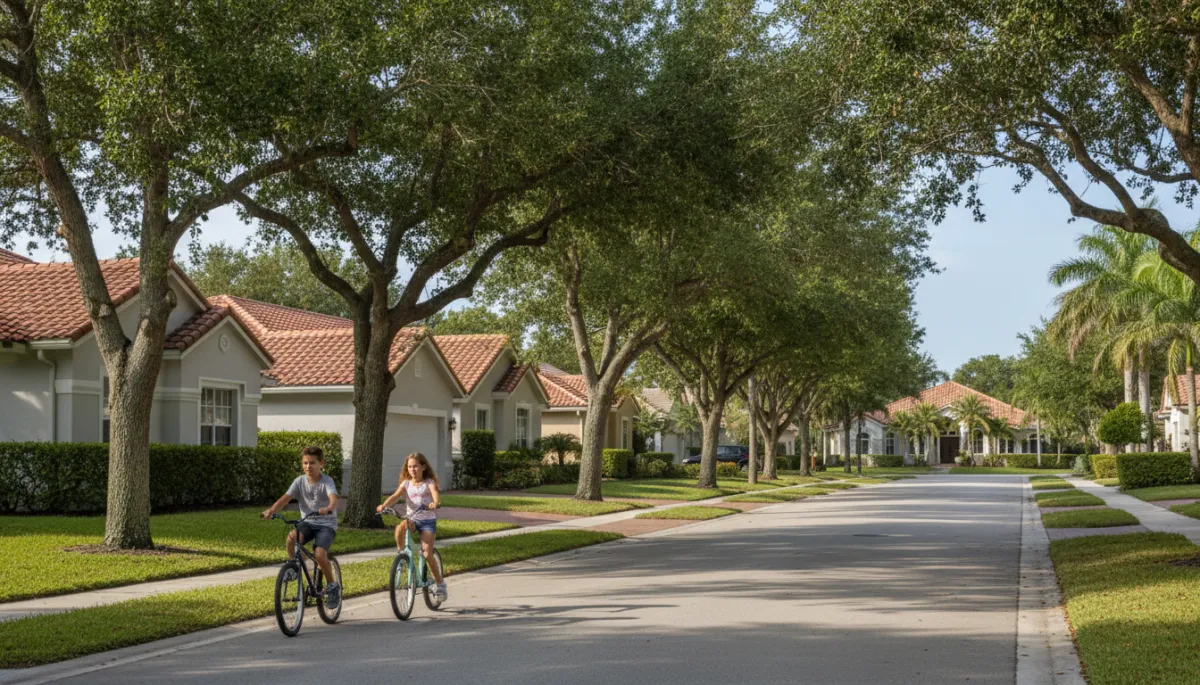
Palmetto Bay homes balance space, greenery, and relative affordability for Miami families.
A Village Built Around Parks and the Bay
What really sets Palmetto Bay apart is its deep investment in parks, recreation, and the environment. Coral Reef Park offers more than 50 acres of green space, trails, and wetlands. Thalatta Estate Park combines Mediterranean‑style architecture with serene waterfront views, while Ludovici Park and the library host performances, classes, and community events. The village is currently funding a new pickleball center and skate park upgrades as part of a multi‑year capital improvement program (palmettobay-fl.gov).
Environmental stewardship is also front and center. In 2026, Palmetto Bay launched an oyster reef restoration project in Biscayne Bay, deploying hundreds of reef structures across 24 acres to improve water quality and reduce shoreline erosion. New sidewalks, a bicycle and pedestrian master plan, and updated on‑street parking programs all point to a suburb actively planning for walkability and long‑term resilience.
💡 Pro Tip: If weekend life for you means bike paths, playgrounds, and community events, Palmetto Bay’s park network is a major plus compared with many other Miami suburbs.
Who Is Palmetto Bay Best For?
Families seeking a safe, suburban feel and strong schools without Pinecrest‑level price tags.
Buyers who value parks, waterfront access, and environmental initiatives as part of daily life.
Those looking for a first or “step‑up” single‑family home in the $1–$2 million range, with room to grow.
Safety, Schools, and Everyday Life: Pinecrest vs. Palmetto Bay
When choosing between Pinecrest vs. Palmetto Bay, safety and schooling are usually at the top of the list—and both suburbs perform well. Palmetto Bay boasts crime rates roughly 48% below the national average, earning an overall safety grade of A‑, with low risks for both violent and property crime (doorprofit.com). Pinecrest is widely regarded as very safe as well, consistently mentioned on real estate forums and local boards as one of Miami‑Dade’s most secure communities.
Both areas are served by highly rated public schools and a cluster of well‑known private options. Pinecrest tends to attract households with slightly higher educational attainment—about 71.7% of residents over 25 hold at least a bachelor’s degree, compared with roughly 62% in Palmetto Bay. That difference, combined with the wide gap in median incomes, helps explain why Pinecrest skews more toward ultra‑luxury estates, while Palmetto Bay offers a broader mix of home prices and property types.
Affordability and Investment: What Your Money Buys
Affordability is where the two communities truly diverge. In Pinecrest, a typical home costs roughly 11 times the local median income, and estimates suggest that nearly 69% of median household income would go toward principal and interest on a “typical” property (movewithmomentum.com). This is a market designed for high‑net‑worth buyers and those with substantial equity or cash reserves.
Palmetto Bay, while still expensive by national standards, offers comparatively more breathing room. Lower median incomes and more moderate home values mean your housing budget stretches further—whether that’s trading up to a slightly larger home, prioritizing renovations, or simply reducing monthly payment pressure. For many buyers, Palmetto Bay is the “sweet spot” where they can enjoy Miami suburb living without committing to Pinecrest‑level prices from day one.
📌 Key Takeaway: If Pinecrest is Miami’s long‑term luxury play, Palmetto Bay is the smart value choice—especially if you’re early in your home‑buying journey or prefer financial flexibility.
Pinecrest vs. Palmetto Bay: How to Decide Which Miami Suburb Fits You
Ultimately, deciding which Miami suburb is right for you comes down to priorities. Both Pinecrest and Palmetto Bay deliver safety, greenery, and strong schools—but they cater to slightly different stages of life and financial comfort levels. As you compare options, ask yourself a few practical questions:
What’s my realistic budget? If your target price range is $1–$2 million, you’ll generally find more options and better value among Palmetto Bay homes. If your budget comfortably extends into the $3–$5 million+ range, living in Pinecrest opens the door to larger lots and higher‑end finishes.
How important is lot size and privacy? Pinecrest is known for estate‑style properties with expansive yards and a more secluded feel. Palmetto Bay still offers generous lots by Miami standards but tends to be somewhat denser and more neighborhood‑oriented.
Do I prioritize parks and community programming? If your weekends revolve around youth sports, playgrounds, and waterfront parks, Palmetto Bay’s active recreation system and environmental projects may tip the scales in its favor.
What’s my long‑term plan? Some buyers intentionally choose Palmetto Bay as a first step into Miami’s single‑family market, with an eye toward upgrading to Pinecrest later. Others move straight into Pinecrest for the long haul, viewing it as a cornerstone of their long‑term wealth strategy.
The Bottom Line: Two Excellent Choices, One Best Fit for You
In the Pinecrest vs. Palmetto Bay debate, there’s no “wrong” answer—only the suburb that best aligns with your budget, lifestyle, and long‑term goals. If you’re drawn to estate‑level luxury, oversized lots, and one of Miami‑Dade’s most established high‑end markets, living in Pinecrest may be worth the premium. If you’re looking for an upscale but more accessible community, with excellent parks, strong schools, and a genuine neighborhood feel, Palmetto Bay homes offer compelling value among Miami suburbs.
As you tour each area, pay attention not just to the houses, but to how your daily routine would feel—school drop‑offs, grocery runs, park visits, commutes, and weekend outings. The right Miami suburb is the one where the numbers make sense and the neighborhood feels like home the moment you turn onto the street.